The short answer
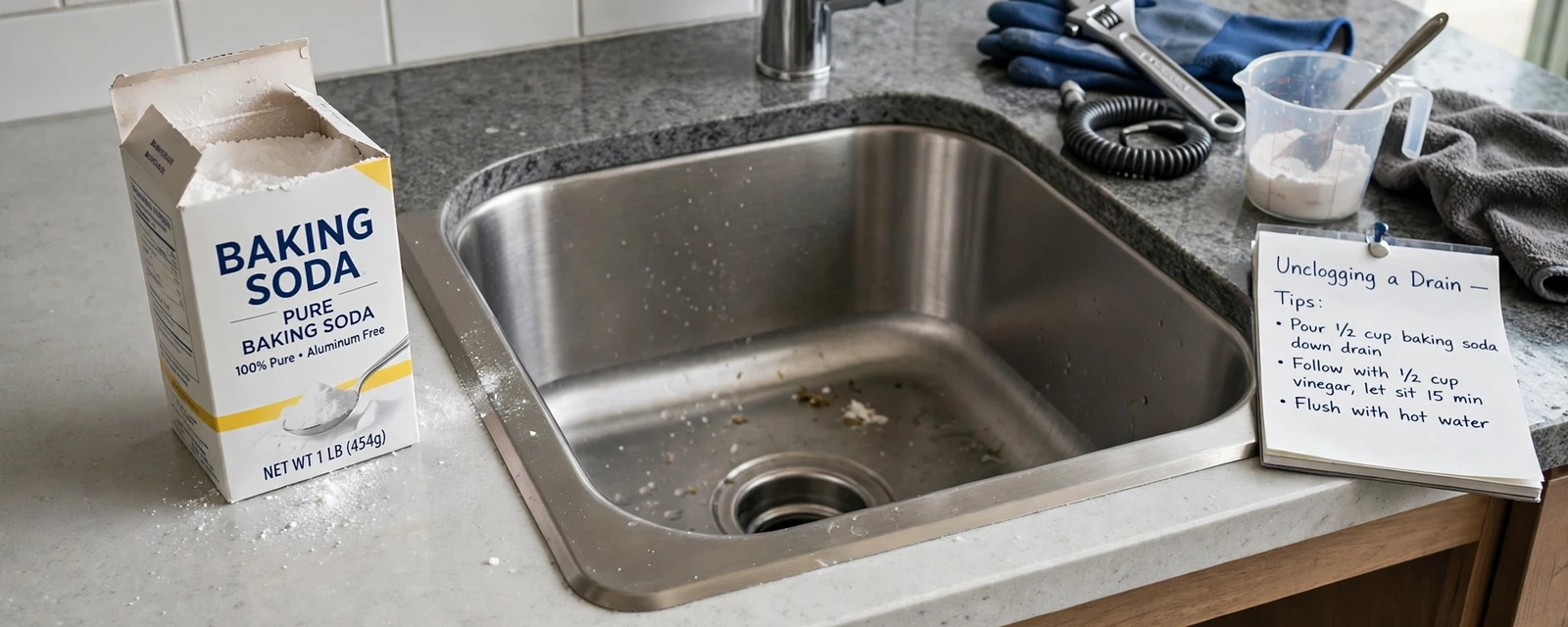
Baking soda and vinegar can loosen light grease and soap film in a slow drain, but they will not dissolve hair, food chunks or a solid blockage. They fizz, which feels like progress, though the effect is mild.
Use them for a slow drain or an odor, not a standing pool of water. If a sink or toilet is full and will not drain, stop and call. Our drain cleaning page covers what a plumber does for stubborn clogs.
How to try it safely
If the drain is only slow, you can try this once. Do not use it after a chemical drain cleaner.
Remove standing water
Scoop or bail it out so the solution reaches the pipe.
Pour in about half a cup of baking soda
Push it down the drain with a spoon.
Add half a cup of white vinegar
Cover the drain and wait about fifteen minutes.
Flush with hot tap water
Run it for a minute, not boiling water if the pipe is PVC.
Stop if it does not help
Repeating many times will not improve the result.
Why drains here collect mineral and soap film
Source type: City of Dixon 2024 water quality report.The City of Dixon's 2024 report lists total hardness averaging 163 parts per million. Hard water reacts with soap to form a sticky scum that coats pipe walls and traps hair. A slow bathroom sink or shower is often this film, not a solid object.
That is the situation where a baking soda treatment has a small chance of helping. A drain snake or a plumber's cleaning tool removes the film mechanically and is far more effective. Drains that return to slow within days point to a clog farther down the line.
The U.S. Geological Survey classifies 121 to 180 parts per million as hard, which puts Dixon's 163 average in that band and explains the soap scum.
Signs the problem is bigger than baking soda
Some symptoms mean the clog is not in the trap. Home remedies will not reach it.
Water backs up in another fixture
The clog is in a shared branch or the main line.
A gurgling sound after a flush
Air is being pulled through a partly blocked line.
Several drains slow at once
The main line is partly blocked.
Sewer smell indoors or outside
A line is holding waste.
Water at a floor drain
The main line is backing up.
Drain still slow?
Call the 24/7 line. A same-day appointment is offered when available.
What to avoid
Do not mix baking soda and vinegar with a chemical cleaner. Chemical cleaners can damage older pipes and splash. Do not pour them into a toilet, a garbage disposal or a drain that is completely full.
Boiling water can soften and warp PVC fittings. Hot tap water is enough. If you have already used a chemical product, tell the plumber, because it affects how they handle the line.
Why the fizz feels like it works
Baking soda and vinegar react to produce carbon dioxide gas, which creates bubbles. The bubbles can loosen a thin film of soap and grease, and the vinegar can dissolve a little mineral scale. That is a real effect, but it is small.
The fizz does not carry enough force to move a mass of hair or a solid object. That is why a drain sometimes seems better for an hour and then slows again. The clog is still there.
Preventing slow kitchen drains
Most kitchen clogs start with grease. Wipe pans with a paper towel before washing, and put cooled grease in the trash instead of down the drain. Run hot water for a minute after washing dishes to carry film through the trap.
Use a strainer in the sink to catch food. A disposal grinds food, but it does not remove grease, and the fat can still harden farther down. If kitchen drains slow often, our drain cleaning service clears the line and checks the cause.
Safety when you use any cleaner
Keep these rules in mind with any product.
- Never mix chemical cleaners with each other.
- Wear gloves and eye protection.
- Ventilate the room.
- Do not plunge a drain that has chemicals standing in it.
- Tell the plumber what you used before they start.
What a plumber does that baking soda cannot
A plumber clears a clog with tools that physically remove it. A cable cuts through hair and roots. A jetter blasts grease and scale off the pipe wall. A camera shows what is inside, so the work is not a guess.
Those tools also find the cause. A clog at a pipe sag, a broken joint or a root intrusion will return unless it is fixed. Baking soda cannot tell you any of that. If you have tried it and the problem is back, the next step is a proper cleaning.
Ask the plumber what they found and where. Knowing the cause helps you prevent a repeat, whether that means changing habits, adding a strainer or repairing a section of pipe.
A realistic plan for a slow drain
Try the baking soda step once, then use a plunger or a hand snake if the drain is still slow. Clean the stopper and the trap under the sink, because many slow drains are caused by a plug of hair right at the opening.
If none of that helps within a day, stop experimenting and call. Each failed attempt gives the clog more time to settle, and some products leave residue the plumber must work around.
Home methods and when they fit
Different clogs respond to different tools.
| Method | Good for | Not good for |
|---|---|---|
| Baking soda and vinegar | Light film and odor | Hair, solid objects and full blockages. |
| Plunger | A clog close to the fixture | A clog in the main line. |
| Drain snake | Hair and nearby clogs | Deep roots or broken pipe. |
| Professional cleaning | Stubborn or repeat clogs | A simple surface film. |
For a main line with roots or grease, ask about hydro jetting. We serve Dixon, Vacaville and Davis.
Baking soda drain questions
Yes, it is mild. The fizz with vinegar is harmless to most pipes, but it is not strong enough to clear a real clog.
About fifteen minutes. A longer soak does not help much.
It can help with odor. A jam or clog needs a different fix.
Hard water forms soap scum that coats pipe walls and traps hair, which makes slow drains more common.
Call when water backs up, more than one fixture is affected or the drain returns to slow within days.