The short answer
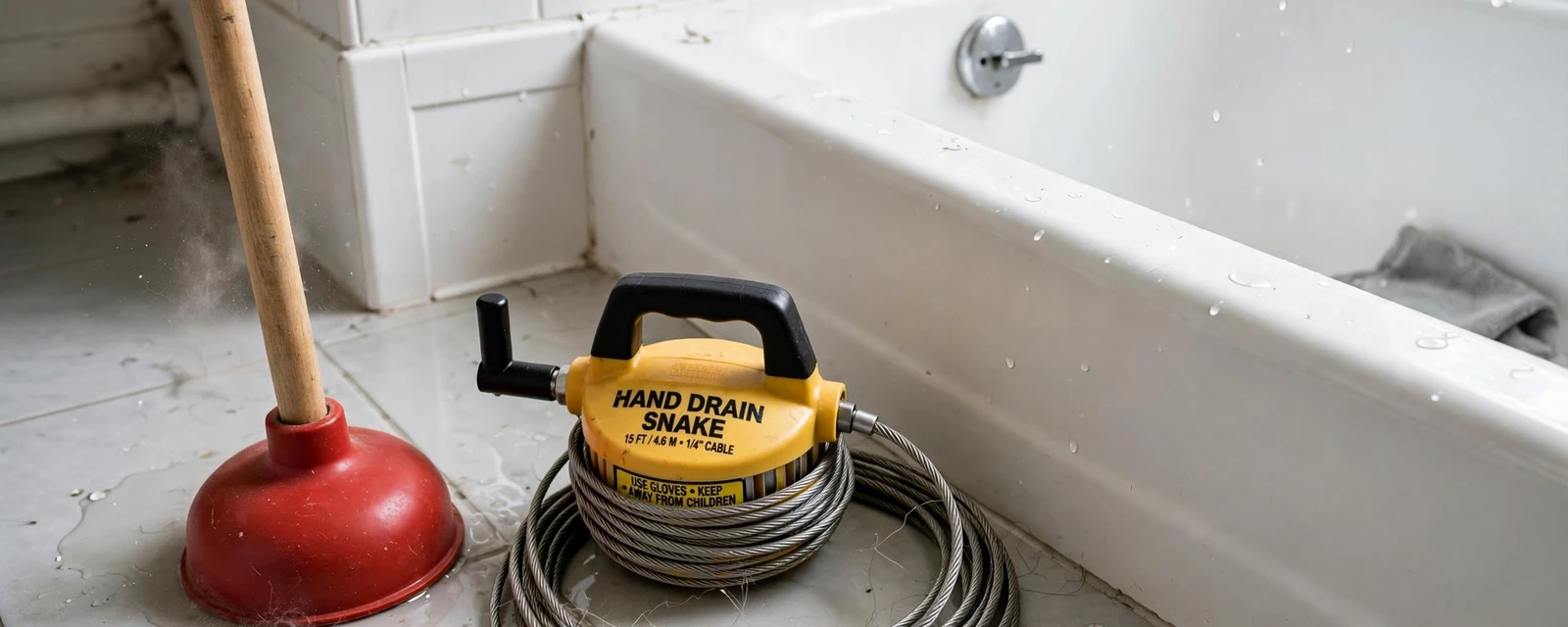
A clog in one fixture can usually be cleared with a plunger or a small drain snake. A clog that affects several fixtures, or comes back, is in the main line and needs a plumber.
Start with the least aggressive method, protect the fixture and stop if you meet resistance you cannot move. Our drain cleaning page covers what we do when home methods are not enough.
Clearing a sink or tub step by step
Gather a cup plunger, a bucket, rubber gloves and a small hand snake. Follow these steps in order.
Remove the stopper or strainer
Pull out hair and debris by hand first.
Seal the overflow
Cover the overflow hole with a wet rag so the plunger can build pressure.
Plunge with firm strokes
Use ten or fifteen pushes, keeping the cup submerged.
Use a drain snake if it persists
Feed it in, turn the handle and pull out what it catches.
Flush with hot water
Run the tap for a minute and check the flow.
Local drain context in Dixon
Source type: City of Dixon Building Division permit handouts.The City of Dixon's permit handouts list clearing a stoppage as work that does not need a permit. A plumber can clear a main line without a permit visit, which keeps same-day service simple.
The handouts also require cleanouts at set points on a sewer line, including the property line and the end of the line. If you can find your cleanout, a plumber can reach the main line without removing a fixture. Knowing where it is saves time during an emergency.
Cleanouts are a code item. The California Plumbing Code, which is based on the Uniform Plumbing Code (UPC), calls for them at set points on a sewer line, and the City of Dixon's handout cites section 719.1.
Which tool for which clog
Match the tool to the symptom.
Slow sink with standing water
A cup plunger, then a hand snake.
Slow shower or tub
A hair-catching tool, then a snake through the overflow.
Clogged toilet
A flange plunger, not a cup plunger.
Kitchen sink with a disposal
Clear the disposal first and check the trap under the sink.
Multiple fixtures backing up
Stop. This is a main line problem.
Home methods not working?
Call the 24/7 line. A same-day appointment is offered when available.
When home methods fit and when they do not
Know where to stop so you do not damage the plumbing.
Home methods fit when
- Only one fixture is slow.
- Water drains, just slowly.
- The clog is near the opening.
- You can remove and clean the trap.
Call a plumber when
- Water backs up in another fixture.
- The clog returns after a few days.
- You smell sewage.
- A snake meets a hard stop.
Using a hand snake
Feed the cable into the drain until you meet resistance. Tighten the thumbscrew, turn the handle clockwise and push gently. When the cable moves freely, pull it back slowly, since it often brings hair and debris with it.
Wipe the cable as it comes out, and run hot water to confirm the flow. If the cable stops against something hard and will not pass, stop. Forcing it can scratch pipes or push the clog deeper.
Clearing a toilet clog
Use a flange plunger and make sure the bowl has enough water to cover the cup. Push slowly at first to seat the seal, then pump firmly for about twenty seconds. Repeat a few times before judging the result.
If the water stays high, a toilet auger reaches the bend in the trap. Do not flush again until the water drops. A toilet that clogs often, or backs up with another fixture, points to a line problem, and our toilet repair page explains the checks.
After the drain clears
Run hot water for a minute and watch for any slow spots. Clean the stopper and strainer, wipe the area and put the tools away. Note the date, because a clog that returns within a week or two has a cause upstream.
If you needed the snake more than once this season, a deeper cleaning is worth pricing. Our hydro jetting page covers cleaning the whole line with high pressure water.
Plunger or snake: which first
Start with the less invasive tool and move up. Each one works best in a certain situation.
Start with a plunger when
- Water is standing in the sink or tub.
- The clog is close to the opening.
- The fixture drains slowly rather than not at all.
- You have not used chemicals in the drain.
Move to a snake when
- The plunger moves the water but it returns.
- Hair is likely the cause.
- The drain gurgles after plunging.
- The clog seems farther down the pipe.
Know when to stop
Plungers and hand snakes are safe in the right hands, but they have limits. If the water does not move after two honest attempts, stop. A third and fourth attempt rarely work and can damage a fixture or push the clog farther.
Tell the plumber what you tried and what you saw. That history shortens the diagnosis and helps them choose the right tool.
Keep a bucket and old towels nearby while you work. Water in the trap spills when you remove it, and a little preparation keeps the cleanup short. Wear gloves, since drain buildup is unpleasant and can carry bacteria.
Prevention for Dixon homes
Keep grease out of the kitchen sink, use hair catchers in showers and never flush wipes, even labeled flushable ones. Run hot water after washing dishes to move grease along. Hard water leaves scum in the pipe, so a periodic cleaning of traps helps.
If clogs keep returning, a camera inspection shows what is going on inside the line. See our sewer camera inspection page for details. We serve Dixon, Vacaville and Davis.
Clogged drain questions
A cup plunger is for flat drains such as sinks and tubs. A flange plunger has an extra rubber lip made for toilets.
Use a toilet auger, which is made to pass the curve without scratching the bowl. A drain snake can damage porcelain.
It can damage pipes and splash. Tell your plumber if you have used it.
No. The City of Dixon's permit handouts list clearing stoppages as exempt.
Look for a capped pipe near the house or at the property line. A plumber can help find it.