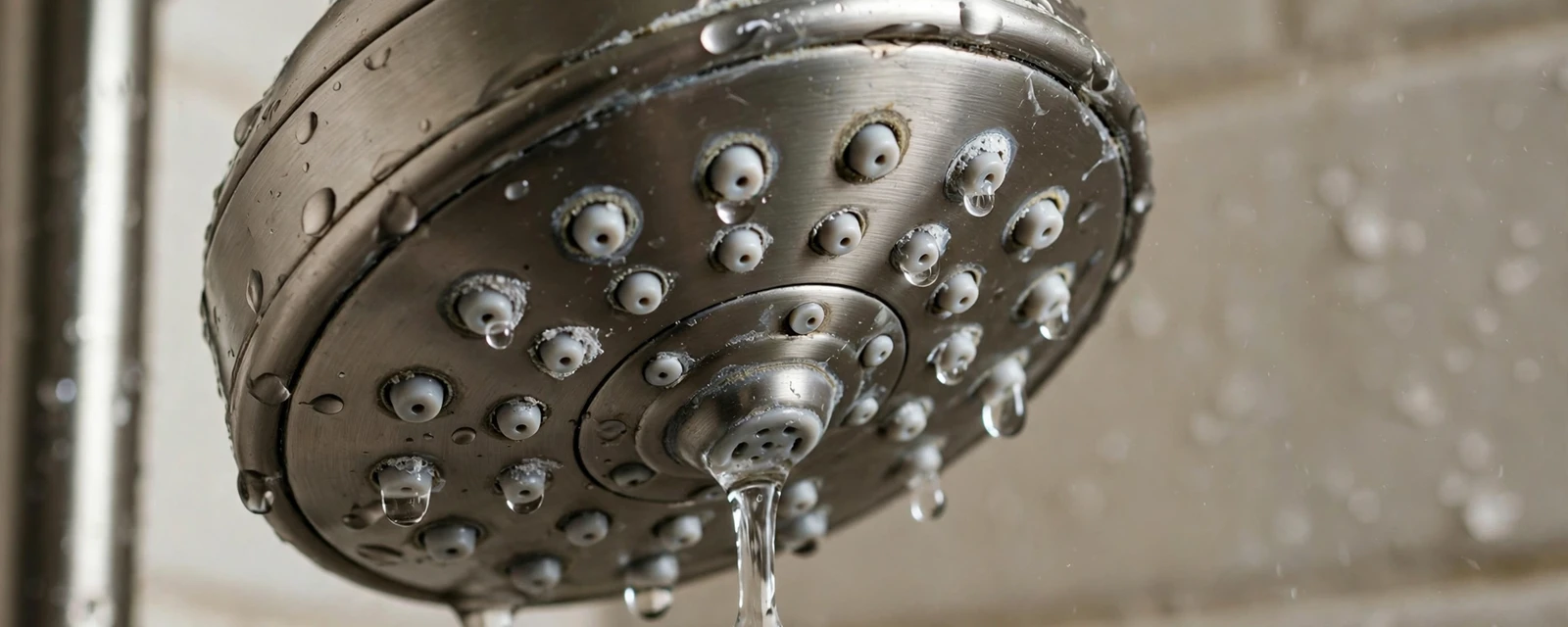
The short answer
A shower that drips after you shut it off almost always has a worn cartridge, washer or valve seat inside the faucet. The fix is usually to replace that part, not the whole faucet. A drip from the spout of a tub shower combo is a different issue than a leak behind the wall.
In Dixon, mineral scale from hard groundwater is a common reason the parts wear out and stick. If the drip is steady or you see water stains on the ceiling below, call a plumber rather than waiting. Our faucet repair page covers the services we offer for fixtures like this.
Match the drip to the cause
Where the water shows up tells you what failed. Use this list before you buy parts.
Drip from the showerhead
The cartridge or seat in the valve is not sealing, so water leaks past it when the handle is off.
Drip from the tub spout while the shower runs
The diverter inside the spout is worn or clogged with scale.
Water around the handle
An O-ring or packing seal behind the handle has failed.
Hot and cold mix when off
A single-handle cartridge is letting both lines bleed together.
Stain on the wall or ceiling nearby
The valve body or a pipe connection behind the wall is leaking.
What Dixon water does to shower valves
Source type: City of Dixon 2024 water quality report.The City of Dixon's 2024 report lists total hardness averaging 163 parts per million, which is about 9.5 grains per gallon. Water at that level leaves calcium and magnesium deposits on any surface it dries on. Inside a shower valve, deposits stick to the cartridge and score the seat, so it no longer seals.
The same report lists pressure between 52 and 62 pounds per square inch. That is normal household pressure, but it keeps pushing water through any weak seal all day. A small drip can waste a surprising amount of water over a month.
Valve work follows the California Plumbing Code, which is based on the Uniform Plumbing Code (UPC). CalGREEN, the California Green Building Standards Code, sets the showerhead limit in section 4.303.
What you can do and what to leave to a plumber
Some steps are safe to try first. Others involve the valve inside the wall.
Reasonable to try yourself
- Shut off the water at the main or the fixture stop.
- Remove the handle and look at the cartridge.
- Soak the showerhead in vinegar to clear scale.
- Take the old cartridge to a store to match the new one.
Better for a plumber
- A valve that has no shutoff stop of its own.
- A cartridge that is stuck or corroded in place.
- Any sign of a leak inside the wall.
- A tile wall that must be opened for access.
Shower valve leaking?
Call the 24/7 line. A same-day appointment is offered when available.
How a shower cartridge replacement goes
The plumber shuts off the water, removes the handle and trim, pulls the old cartridge and installs a matching one. Then the handle goes back on and the valve is tested under pressure. Many cartridges can be replaced without opening the wall.
If the valve body is damaged or has no access, the plumber discusses cutting an access panel or tile. This is the point where the cost of the job changes, so ask for the price before the work starts. Our leak detection service can confirm whether a wet wall is coming from the valve or from a pipe.
Permit rules in Dixon
The City of Dixon's permit handouts list repairing leaks in valves and fixtures as work that does not need a permit, as long as nothing is replaced or rearranged. A cartridge swap fits that description.
Replacing a shower valve with a different type, or moving it, is different. Ask the City of Dixon Building Division whether a permit applies. A new showerhead sold in California must meet the 1.8 gallons per minute limit cited in the CalGREEN section the city lists.
Hot and cold swings in the shower
If the shower turns scalding or cold when a toilet flushes or the dishwasher starts, the valve is probably a pressure-balancing type with a worn cartridge. That cartridge is designed to hold the mix steady when pressure changes elsewhere in the house.
Thermostatic valves use a different part, but the symptom is similar. Replacing the cartridge restores the balance in most cases. If the temperature still wanders, the issue may be a failing water heater thermostat, which our water heater repair page explains.
Low pressure at the shower only
When the shower is weak but the sinks are fine, scale in the showerhead or the valve is the usual cause. Unscrew the head and soak it in white vinegar for an hour. Rinse it, then check the small screen at the arm for debris.
If cleaning does not help, the valve cartridge may be partly blocked by mineral buildup. With 163 parts per million of hardness in city water, this is a common finding in Dixon homes. A plumber can replace the cartridge and check the supply while the trim is off.
When a drip is more than a drip
A steady drip wastes water and raises the bill, but a leak behind the wall can rot framing and grow mold. Stains, soft tile or a musty smell are signs it has gone beyond the faucet. Shut off the water and call.
If you are in Vacaville or Davis, our line covers you as well. The Davis water supply is much softer than Dixon's, so scale-related wear tends to show up sooner on the Dixon side.
Shower faucet questions
A drip from the showerhead after the handle is off, hard handle movement or water leaking around the handle all point to a worn cartridge.
Sometimes. If the water stops at the fixture and the cartridge is accessible, a swap is a modest repair. A stuck cartridge or a wall leak calls for a plumber.
A scored valve seat, the wrong cartridge or a missed O-ring can keep the leak going. The valve body may also be worn.
Hardness of 163 parts per million leaves scale on cartridges and seats, which can stick parts and wear seals. It does not guarantee a drip, but it is a common contributor.
A slow drip can wait for an appointment. Water behind a wall or through a ceiling should be shut off and treated as an emergency.