The short answer
If the water meter keeps moving after you shut off every fixture, water is leaking somewhere. It can be a running toilet, an irrigation valve or a buried line. The meter test tells you whether to look further.
The next step is finding which side of the main valve the leak is on. Our leak detection page explains how we find the exact spot without digging blindly.
The five minute meter test
Do this when no one is using water.
Turn off every fixture and appliance
Include the dishwasher, washing machine and ice maker.
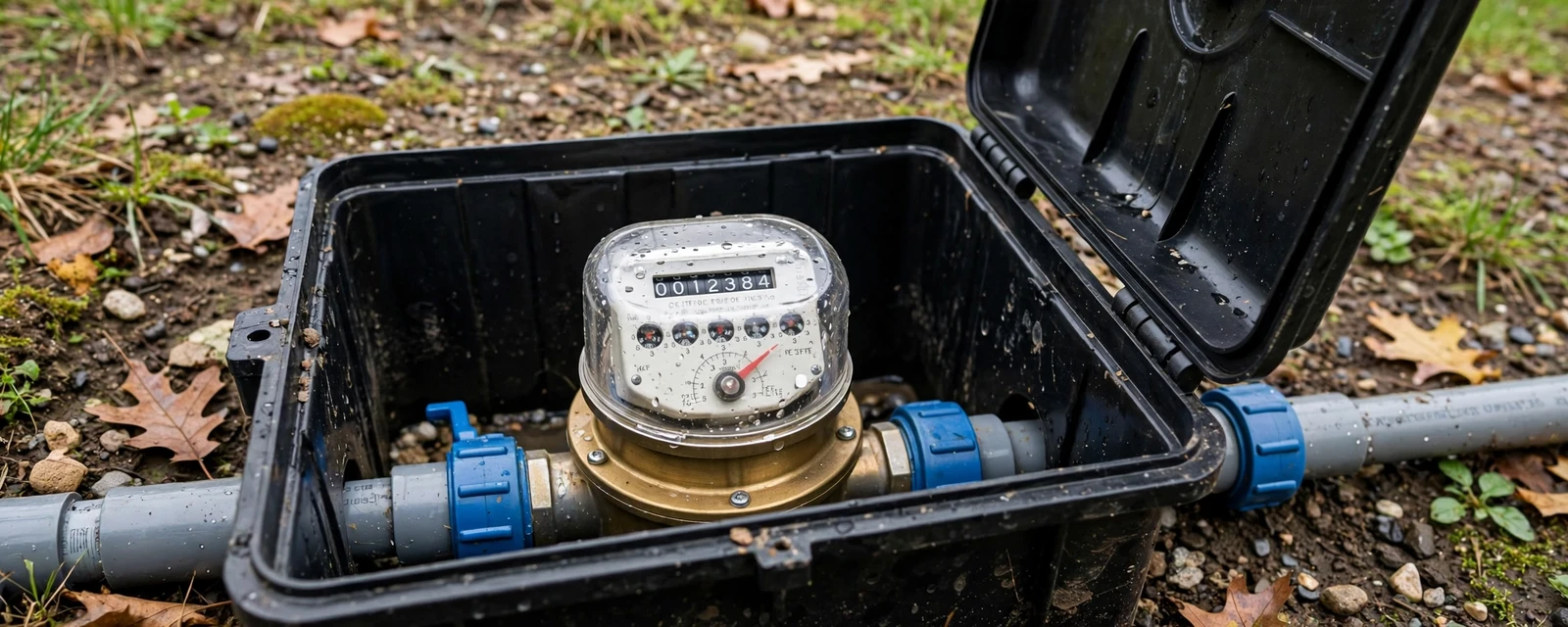
Find your meter
Lift the lid of the meter box, usually near the street.
Read the low flow indicator
A small dial or triangle that spins with even tiny flow.
Wait fifteen minutes and read again
A moving indicator or changed reading means a leak.
Close the main valve and look again
If it stops, the leak is inside. If it keeps moving, it is before the valve.
The City of Dixon's role and your role
Source type: City of Dixon utility contacts and 2024 water quality report.The City of Dixon lists utility billing at (707) 678-7008 and water operations at (707) 678-7050. After hours, the city lists an emergency line at (707) 676-3005. Ask billing for your recent usage history so you can see when the jump began.
The city's 2024 report lists system pressure between 52 and 62 pounds per square inch. That steady pressure forces water through a leak around the clock, which is why even a small leak can show up on a bill. The leak on your side of the meter is your responsibility, and the city handles its side.
Meter still moving?
Call and describe what you found. A same-day appointment is offered when available.
Common sources of a hidden leak
Start with the easy ones. They are the most common.
A running toilet
Check with a dye test in the tank.
A dripping faucet or shower
Even a slow drip adds up over a month.
An irrigation valve stuck open
Look for a wet patch or a valve box full of water.
A water heater relief line
A line that drips means pressure or temperature is too high.
A buried line to the house
Wet soil between the meter and the house.
Fixture leaks are covered on our toilet repair page, and buried lines on water line repair.
What the test results mean
Two results tell you most of what you need.
| Result | What it means | Next step |
|---|---|---|
| Meter stops with the main valve closed | Leak is inside the house or on the house side of the valve | Check fixtures, then call for leak detection. |
| Meter keeps moving with the main valve closed | Leak is before the valve, in the yard or at the connection | Call for line tracing. |
| No movement at all | No active leak at this moment | Check for intermittent sources such as irrigation timers. |
Compare bills month to month
Pull out several recent bills and compare usage, not just the dollar amount. A sudden jump with no change in the household points to a leak. A gradual rise over several months can point to a slow leak or a worn toilet.
Note the season too. Irrigation raises summer usage in many homes. If your bill climbs in the cooler months and the lawn is dormant, that is a stronger sign something is leaking.
Check irrigation and outdoor taps
Walk the yard with the sprinklers on and off. Look for soggy spots, geysers or valve boxes full of water. A stuck valve can run all night. Turn the controller to off and rerun the meter test.
Check outdoor hose bibs, too. A hose left connected with a leaking nozzle, or a bib that drips inside the wall, can waste water for weeks.
Appliances that leak quietly
Ice makers, refrigerator water lines, dishwasher hoses and washing machine hoses can leak behind the appliance. Pull the unit out and look for damp floors or stains. Check the shutoff valves for drips too.
If you find a leak behind a fixture, shut off the supply and call. Our faucet and valve repair page and disposal repair page cover the sink side.
When to call a plumber
If the meter test shows a leak and you cannot find it, call. A plumber has pressure gauges and listening gear that find hidden leaks without opening walls. That saves time and avoids damage.
If you find the leak and it is a simple fixture, you may repair it yourself. If it is behind a wall, under a floor or in the yard, a plumber should handle it. Our leak detection page explains the process, and the 24/7 line can book it today.
Keep a log
Write down the meter reading morning and evening for a few days. A steady rise with no use tells you a leak is running. Add notes about irrigation, guests and appliances.
That log helps the plumber narrow the search and gives the utility something concrete if you ask about a bill adjustment.
If the log shows the meter moving even at night, the leak is constant. If it moves only at certain times, look for something on a timer, such as irrigation or a softener cycle.
Insurance and bill adjustments
Some utilities offer a one-time adjustment for a leak that has been repaired, but policies vary. Ask City of Dixon utility billing what documentation they accept. Keep the repair invoice, photos and the plumber's note.
Your homeowner policy may cover resulting damage but often excludes the water itself. Call your agent before the work starts. We serve Dixon, Vacaville and Davis.
Water meter and high bill questions
Look in a ground box near the street or the front property line. The lid lifts off to show the dial.
A small triangle or dial on the meter face that spins even with a tiny flow.
Call the City of Dixon water operations office at (707) 678-7050, or the after-hours emergency line at (707) 676-3005.
Yes. A pressurized leak can run a long time before it shows.
A silent flapper leak can run all day. A dye test finds it.