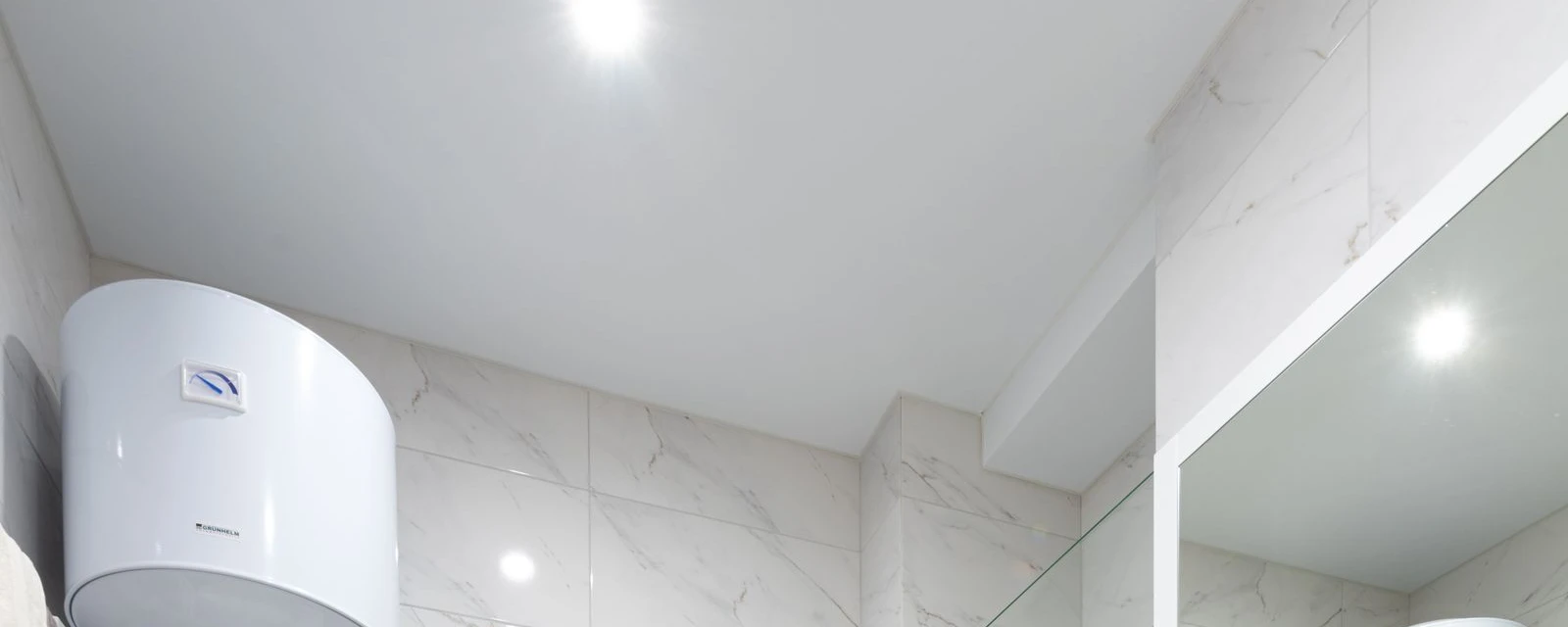
How a tankless water heater works in a Dixon home
A tankless water heater in Dixon, CA heats water only when a tap is open. Cold water enters the unit, passes through a heat exchanger and leaves hot, so there is no tank of stored water losing heat in the background.
The U.S. Department of Energy reports that tankless units last about 20 years, compared with 10 to 15 for storage tanks, and that they are 8 to 34 percent more efficient depending on how much hot water a home uses. Output is typically 2 to 5 gallons per minute, so the unit has to be sized for how many fixtures run together.
Symptoms that mean a tankless unit needs service
Tankless problems feel different from tank problems. Most trace back to scale, flow or venting rather than a failed tank.
Cold water bursts between hot water
A partly clogged heat exchanger or a flow sensor issue causes unstable temperature.
Error code on the display
Codes point at ignition, flow, venting or temperature faults, and the manual lists them.
Water takes longer to heat or never gets hot
Scale narrows the heat exchanger and cuts heat transfer.
Unit shuts off with small flows
Tankless units need a minimum flow of about 0.5 gallons per minute to fire.
Noise or odd smells during a run
Combustion or venting problems need a technician, and a gas smell means call your gas utility.
Flush and descale: why Dixon water makes it a routine job
Source type: City of Dixon water quality report and U.S. Department of Energy guidance.The City of Dixon's 2024 water quality report lists total hardness averaging 163 parts per million, or about 9.5 grains per gallon. That is hard water, and heat makes it deposit scale on the inside of a tankless heat exchanger.
The U.S. Department of Energy advises flushing a tankless unit with a descaling solution in hard water areas. A flush circulates the solution through the heat exchanger to dissolve scale, and then clear water is run through to rinse it. Many homes in hard water areas need this on a regular schedule.
Ask the plumber to check the unit's manual for the manufacturer's flush interval, and ask whether isolation valves are installed so the flush can be done without cutting pipe. A softener upstream cuts scale at the source, which our water softener installation page covers.
Tankless or tank: a plain comparison
A tankless unit changes how a house gets hot water. This table lays out the real differences.
| Question | Tankless | Storage tank |
|---|---|---|
| Typical life | About 20 years | 10 to 15 years. |
| Hot water supply | Continuous, limited by flow rate of 2 to 5 gallons per minute | Limited by tank size, then recovery time. |
| Upfront work | Often needs a larger gas line and new venting | Usually a like-for-like swap. |
| Maintenance | Regular descaling flush in hard water | Occasional flush and anode rod check. |
| Minimum flow | About 0.5 gallons per minute to fire | None. |
If the tank you have is failing and you are choosing what replaces it, see water heater replacement for the permit side of that choice.
Tankless unit acting up?
Call the line and mention any error code on the display. A plumber can tell you what to expect before the visit.
Tankless repair: what usually gets fixed
The most common tankless repairs are flushing scale, cleaning the inlet filter, replacing a flow sensor or igniter and correcting a vent problem. A unit with an error code is easier to diagnose than one that just seems off, so write the code down before you call.
If a unit was installed by another company, ask whether it has isolation valves and what the manufacturer's service interval is. A plumber can add valves during a visit, which makes every future flush quicker.
What changes the price of tankless work
Tankless jobs cost more than tank jobs for the same reason they last longer: they are more involved. These are the factors.
Some electric providers and programs offer rebates on efficient water heaters, so ask before you buy. Programs change often.
For your real number, call (916) 312-0578 and describe the unit you have or the one you are considering.
Serving Dixon, Vacaville and Davis
We take tankless calls across Dixon and in Vacaville and Davis. Davis city water is much softer than Dixon's, so flush intervals differ between the two towns.
If a tankless unit has failed outright and hot water is out, water heater repair is the emergency route through the same line.
Tankless water heater questions in Dixon
Dixon's water averages 163 parts per million hardness, so scale builds up in the heat exchanger. The U.S. Department of Energy advises descaling flushes in hard water, and the manufacturer's manual gives the interval.
Codes vary by brand, and the manual lists them. Common causes are flow, ignition, venting or temperature faults. Write the code down and mention it when you call.
Sometimes not. Tankless units fire at a higher rate than tanks, so the gas line and vent are checked before quoting. Many homes need an upgrade.
It depends on the unit's capacity. Typical units produce 2 to 5 gallons per minute, so two showers and a washer can exceed a smaller model.
Efficiency gains are largest for homes using little hot water, according to the U.S. Department of Energy range of 8 to 34 percent. Upfront cost and venting work are the trade-offs.